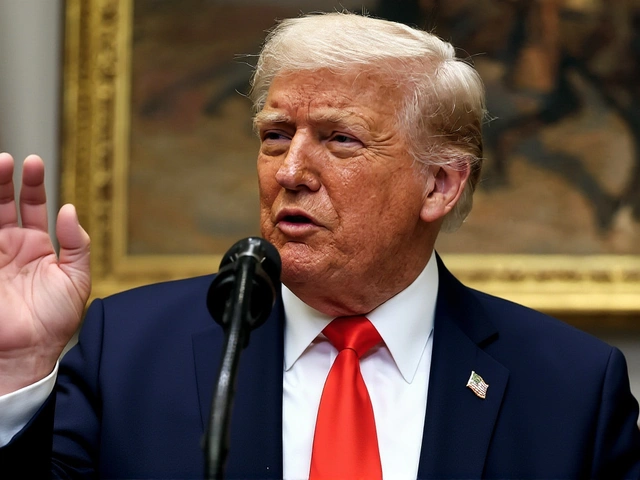
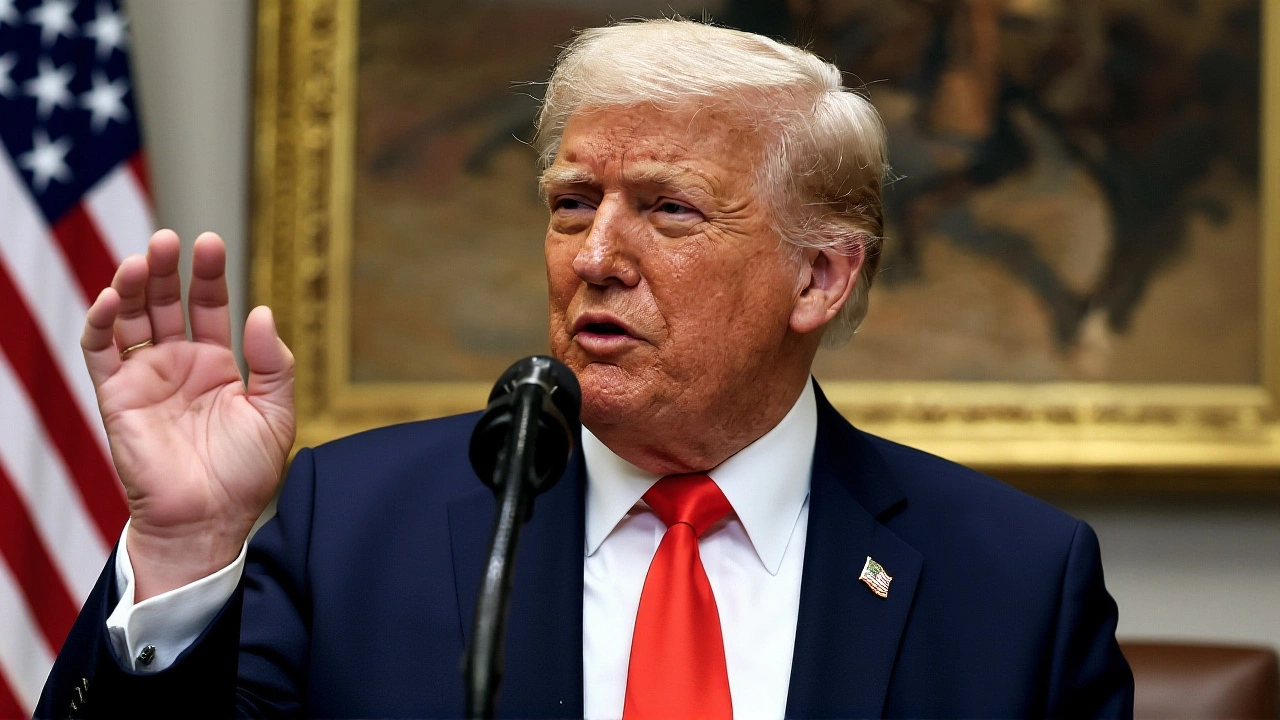
When Donald J. Trump posted a fiery social media statement on Friday, November 28, 2025, he didn’t just announce a policy shift—he ignited a national firestorm. The 45th and 47th president declared he would "permanently pause" all migration from what he called "third world countries," directly linking the move to the fatal shooting of Specialist Marcus Johnson, 24, and the injury of Sergeant Elena Rodriguez, 31, outside the Dwight D. Eisenhower Executive Office Building in Washington, D.C. on Wednesday, November 26. The shooter? A 28-year-old Guatemalan national who entered under a Biden-era program and was granted asylum in absentia. The twist? This wasn’t just about border security. It was about identity, belonging, and who gets to call America home.
What Happened at the White House Perimeter?
At 2:15 p.m. EST on November 26, Specialist Marcus Johnson and Sergeant Elena Rodriguez were stationed near the Dwight D. Eisenhower Executive Office Building, part of the White House security detail. They weren’t combat troops. They were National Guard members assigned to support federal law enforcement—a routine, unglamorous duty that rarely makes headlines. Then, an ambush. A semi-automatic handgun. Two shots. One man dead. Another wounded. The suspect fled but was caught hours later near the Anacostia River. His name? Not released publicly. His origin? Guatemala. His legal status? Asylum-approved on October 15, 2024—after Trump returned to office, but under rules written under Biden.The White House didn’t mince words. Press Secretary Karoline Leavitt said at her 10 a.m. briefing on November 27: "This was something they could not prevent because of the requirements under the Biden program." She was referring to the mandatory 180-day asylum review window under Section 208 of the Immigration and Nationality Act. The shooter had been processed at the U.S. Border Patrol Station in McAllen, Texas on March 12, 2024, released with an ankle monitor, and failed to show up for his final hearing. Yet, due to backlogs, he was granted asylum anyway. "Administrative failure," Leavitt called it. Trump called it treason.
The Policy That Changed Overnight
By 10:30 a.m. EST on November 28, Donald J. Trump had posted his response: "We will permanently pause all migration from third world countries. Anyone incapable of loving our country or non-compatible with Western civilization will be deported. No exceptions." The statement was direct, emotional, and legally sweeping. No details were given on which countries were included—but within hours, Evan Powers, Senior Director for Strategic Communications at the National Security Council, confirmed the list: Guatemala, Honduras, El Salvador, Venezuela, and Haiti. These are the same five nations identified in 2024 as top sources of asylum seekers along the Southwest border.Simultaneously, the Department of Homeland Security was ordered to launch a "sweeping review" of all 42,187 green card holders from those five countries. As of November 27, 2025, 18,452 lived in California, 9,871 in Texas, and 7,643 in Florida. No timeline was set for the review. But the message was clear: legal residency is now under suspicion. "This isn’t about crime," said one immigration lawyer in Miami who asked not to be named. "It’s about fear being weaponized into policy. These are people who’ve paid taxes, raised families, served in our military. Now they’re being treated like suspects because of where they were born."
A Policy Without Precedent Since 1924
Trump’s proposed "permanent pause" would affect an estimated 1.2 million annual visa applications from 78 countries classified by the United Nations Development Programme as having a Human Development Index below 0.700. That’s more than 60% of the world’s low- and middle-income nations. It’s the broadest immigration restriction since the Johnson-Reed Act of 1924, which banned immigration from Asia and imposed strict quotas on Southern and Eastern Europeans. Back then, it was based on racial pseudoscience. Now, it’s framed as national security.What’s different this time? The numbers. Between January 1 and November 26, 2025, the Department of Homeland Security recorded 1,872,631 migrant encounters along the Southwest border. That’s up 18% from 2024. But here’s the nuance: 73% of those were turned back under Title 42 or expedited removal. Only 12% were granted asylum. And only a fraction of those—fewer than 5,000—received green cards. Yet Trump’s rhetoric conflates all of them.
What Comes Next?
The administration is preparing to submit the National Security and Border Integrity Act of 2025 to the 119th Congress on December 2. The bill would codify the "permanent pause," create a new "compatibility screening" for green card holders, and expand detention authority for those deemed "non-compatible." Legal experts warn it’s a constitutional minefield. The Fifth Amendment guarantees due process. The Fourteenth guarantees equal protection. Can the government revoke legal status based on cultural compatibility? No court has ever upheld such a standard.Meanwhile, the Department of Homeland Security began its green card reviews on Saturday, November 29. Initial findings are due in 30 days. Families are already packing. Lawyers are filing emergency motions. Churches are offering sanctuary. And in Washington, D.C., the National Guard is now patrolling with rifles—not just pistols.
Why This Matters Beyond the Headlines
This isn’t just about borders. It’s about who we are as a country. In 2021, the Biden administration opened its arms to unaccompanied children fleeing violence. In 2025, Trump is closing them to entire nations. One administration saw compassion. The other sees chaos. But both ignored the real issue: a broken immigration system that’s been starved of funding for decades. The shooter didn’t slip through because of Biden’s policy. He slipped through because the system is overwhelmed, understaffed, and under-resourced.And here’s the quiet truth: most green card holders from those five countries aren’t criminals. They’re nurses. Teachers. Small business owners. One of them, a Honduran woman in Miami, started a nonprofit that helps veterans with PTSD. She’s now terrified. "I’ve been here 12 years," she told a reporter. "I voted in 2024. I pay taxes. My son is in the Army. Now they want to take my card away because of one man’s crime? That’s not justice. That’s punishment by association."
Frequently Asked Questions
What does 'permanently pause' mean legally?
"Permanently pause" isn’t a legal term—it’s political language. Legally, it would require Congress to amend the Immigration and Nationality Act to suspend visa issuance from 78 countries. Without legislation, the administration can only delay processing or deny new applications. But it cannot deport existing green card holders without due process. Legal scholars warn this move may trigger mass litigation under the Administrative Procedure Act.
Who is affected by the green card review?
The review targets 42,187 legal permanent residents from Guatemala, Honduras, El Salvador, Venezuela, and Haiti as of November 27, 2025. These are people who’ve passed background checks, paid fees, and lived in the U.S. for years—some over a decade. The review will examine criminal records, employment history, tax compliance, and community ties. No one will be deported immediately, but the threat of revocation is enough to destabilize families and careers.
How does this compare to past immigration crackdowns?
The closest parallel is the 1924 Johnson-Reed Act, which banned Asian immigration and imposed national-origin quotas. Trump’s policy is broader—it targets entire regions based on development metrics, not race. But like Johnson-Reed, it uses fear of crime to justify exclusion. The 2017 "Muslim ban" targeted specific nations; this targets 78 based on economic status. Both rely on the same logic: some people don’t belong.
What role did the Biden administration play in this tragedy?
The shooter entered under the "Humanitarian Protection Unaccompanied Children" program, which was designed for minors—not adults. His case was misclassified. He was processed as an adult, released with an ankle monitor, and missed his hearing due to backlogs. The Biden administration’s asylum system was overwhelmed, but the Trump administration inherited the backlog and chose not to fix it. The White House now blames Biden for a failure they could have addressed.
Can Trump deport green card holders without a trial?
No. Green card holders have constitutional rights. The government must prove they committed a deportable offense—like an aggravated felony—or fraudulently obtained status. "Non-compatibility with Western civilization" is not a legal ground for deportation. Any attempt to revoke status on that basis would be struck down by federal courts. The administration may try to pressure individuals to leave voluntarily, but forced removal without due process would be illegal.
What’s the timeline for the National Security and Border Integrity Act?
The bill is scheduled for introduction on December 2, 2025. It will likely be fast-tracked in the House, where Republicans hold a majority. But in the Senate, where Democrats control 51 seats, it faces certain filibuster. Even if passed, legal challenges will delay implementation for years. The real impact? Uncertainty. Families are already breaking apart. Businesses are losing workers. And the country is more divided than it’s been since 2020.